
Why Your Early 40s are the Perfect Time to Prepare for Perimenopause
Hormonal changes start for most women once you hit that 40s milestone. Knowing what these changes are and making small adjustments to your eating and lifestyle habits could mean the difference between:
a rollercoaster perimenopause where your health and sanity are severely tested
OR
a smooth ride during perimenopause and a reduction in perimenopause symptoms
What are these changes and what can you do now to prepare for your perimenopause journey?

The key hormonal change that occurs after age 40 are the fluctuations in our sex hormones primarily oestrogen and progesterone when most women will be in a state of
- High/Low Oestrogen due to the erratic swings and spikes in our oestrogen levels
- Low progesterone – progesterone is produced primarily after ovulation from our ovaries so once we stop ovulating we rely on small amounts produced from our adrenal glands
Why is this significant?
Why oestrogen is important during perimenopause
Oestrogen is like the WiFi of our brain & its key roles apart from the obvious one of reproduction are:
- Brain energy
- Mood stabilising
- Fat burning
- Bone health
Common side effects of fluctuating oestrogen during perimenopause can be divided into physical and mental symptoms
Physical symptoms include:
- Hot Flushes and Night Sweats
- Irregular periods & bleeding changes
- Vaginal & urinary discomfort ( e.g. more frequent UTIs)
- Trouble sleeping
- Joint aches, headaches & weight gain around the middle
Emotional symptoms include:
-
- Mood Swings including irritability and anger
- Unexplained low mood and feelings of overwhelm
- Brain fog or Memory lapses
Other symptoms include:
- Fatigue or low energy
- Low libido
Why progesterone is important during perimenopause
Progesterone is our calming hormone & plays a key role during our cycling years in:
- Mood stabilising
- Sleep
- Regulating menstrual cycle
- Balancing oestrogen
Common side effects of lowered levels of progesterone during perimenopause can also be divided into physical and mental symptoms.
Physical Symptoms include:
- Irregular or heavy periods
- Sleep challenges e.g. restless nights, not feeling refreshed in the mornings
- Breast tenderness or bloating as progesterone helps regulate fluid balance
Emotional Symptoms include:
- Anxiety & Irritability
- Low mood or depressive feelings
- Worse PMS symptoms
- Increased sensitivity to stress
- Plus other symptoms of mild cognitive fuzziness
How can you prepare for perimenopause NOW?
Making small changes in your eating habits and lifestyle now can help you :
- moderate these hormonal changes
- reduce symptoms
- take control as opposed to being fearful about perimenopause
The focus of these changes is predominantly based around ensuring that:
- Our blood sugars are balanced
- We are eating sufficient daily protein as well as all important fibre
- We are exercising appropriately (but not overexercising)
- We are incorporating stress reducing activities into our daily lives
Please read on to understand the science behind why these are important, and what simple changes you can make in each of these areas to help you at perimenopause.
Why is blood sugar balance important at perimenopause?
During perimenopause one big change is the way your body handles sugar (glucose) . As oestrogen dips, it can make your body less sensitive to insulin, the hormone that helps move sugar into cells. This leads to blood sugar swings, which might feel like energy crashes, cravings, or fatigue.
Keeping blood sugar steady isn’t just about avoiding the “hangry” moments – it’s key to feeling your best and protecting your long-term health during this transition because fluctuating blood levels make it easier to gain weight – especially around the middle – which can lead to insulin resistance and inflammation.
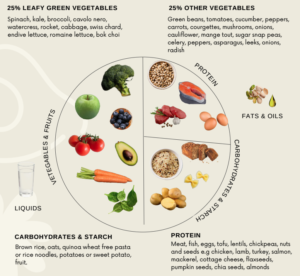
Enjoying blood sugar balancing meals means assembling your meal plates as pictured below in order to help:
- Promote healthy metabolism to stimulate fat burning & avoid weight gain
- Help you stay insulin sensitive to prevent risk of diabetes
- Protect your heart health (swings in blood sugar can damage blood vessels, raise cholesterol or blood pressure)
- Protect your mood, energy and sleep
Why Protein matters during perimenopause
Perimenopause is a time when your body loses muscle mass and bone strength. Protein is the building block that acts as the key fuel for your muscles and bones, as well as energy levels and so helps to counteract muscle loss & support bone health at this time.
Eating sufficient protein at perimenopause will help you feel stronger, more energised, and resilient. Studies show that women in perimenopause often need more protein than in younger years to counteract hormonal shifts at this time, so aim for about 1.5 g – 2.2g of protein per kilo of body weight and towards upper end if you are very active, spread across 3 or 4 meals a day
Declining hormones means our bodies become more resistant to the muscle building effects of protein so it makes sense that we need more protein than we did in our earlier years to maintain /resist muscle loss*
Good sources of protein include tofu, tempeh, all legumes & pulses, eggs, lean meat & fish.
High quality protein powders can also be helpful to hit your daily protein target but as a rule I advise clients to limit themselves to one meal a day from protein powder and avoid all the highly processed high protein foods from bars to cereals to high protein meals which have swarmed onto our supermarket shelves in the last year.
*For more information on protein at perimenopause especially around exercise please read this article https://www.nutrition4change.com/articles/the-relationship-between-nutrition-exercise-and-female-hormones/
Why is fibre intake important at perimenopause?
Fibre acts as a gentle support system during perimenopause to help smooth out symptoms and counter the hormonal and metabolic changes at this time whilst protecting your long term health & overall wellbeing.
More specifically fibre intake will support:
Gut health and mood – your gut microbiome thrives on fibre which helps to calm inflammation, boost serotonin production (our happy hormone) as well as maintaining healthy digestion and a healthier gut-brain connection to ease mood dips or brain fog.
Aids blood sugar control & weight management – fibre slows sugar absorption, keeping levels steady to reduce insulin resistance. Fibre also supports energy and satiety so we are fuller for longer and therefore not tempted to overeat and can avoid cravings or worse belly fat build up which is a common frustration at perimenopause.
Boosts heart health – perimenopause raises heart disease risk as oestrogen’s protective effects wane, but fibre helps by lowering cholesterol (soluble fibre binds it in the gut) and reducing inflammation.
Fibre intake also supports our health as it protects bone density indirectly by aiding nutrient absorption like calcium and magnesium.
Observational data links higher fibre in midlife women to 15-20% lower cardiovascular events and slower bone loss. (Women’s Health Initiative (WHI) Prospective Cohort Study Glenn et al., 2021 the Comprehensive Review of Prebiotics and Bone Mineral Metabolism Whisner et al., 2017, Pooled Analysis from Nurses’ Health Study (NHS), NHS II, and Health Professionals Follow-up Study Glenn et al., 2023)
In functional medicine terms, fibre helps to prevent common perimenopause presentations of chronic low-grade inflammatory state and nutrient-cofactor insufficiency.
Tip: please start slowly if your current intake is low to avoid excess gas (increase gradually ensuring you drink lots of water), slowly increasing up to 30g of fibre daily from mixed sources.
For example: oats for breakfast, salads for lunch, beans for dinner. Tracking intake via an app can help hit that 30g goal.
This is a simple, empowering step to feel more in control during perimenopause.
For more information on how to hit 25-30g of fibre daily please go to my page detailing a high fibre 5 day meal plan
The importance of exercise before and during perimenopause
The loss of oestrogen and progesterone in perimenopause affects our bone health and muscle mass, making us more susceptible to joint pain and injury. Incorporating strength and resistance training into your weekly exercise routine from your early 40s is one of the best perimenopause lifestyle changes you can make.
Building muscle helps mitigate the drop in fat burning at this time ( due to lower levels of oestrogen) and helps with body composition changes which occur during Perimenopause. I have also witnessed many other benefits of seeing women take up strength training in their early 40s – or even later, including increased self-esteem, confidence, energy, willingness to take on new things.

Stress management and resilience during perimenopause
If we lose almost all of our” calming friend” progesterone during perimenopause it makes sense to make some lifestyle changes now to reduce the stress burden on our bodies.
Without the buffering of progesterone we are more susceptible to the effects of cortisol (our stress hormone)
Look for ways to actively manage stress and incorporate relaxing activities into your week.
I advise clients to
- spend more time outdoors and in nature
- prioritise time with friends
- make time to enjoy a relaxing bath
- ensure they prioritise sleep and go to bed earlier
Just 1 calming activity per day can help you achieve a ‘restore and repair’ state as opposed to a ‘flight or fight or freeze’ response.
Conclusion
Perimenopause frequently coincides with a particularly demanding life stage, involving teenage children, ageing parents, and work responsibilities. At the same time, hormonal changes can lead to a range of symptoms as described above including hot sweats and poor sleep, alongside emotional symptoms such as anxiety and low mood, leaving many women feeling vulnerable and less in control.
Every woman’s experience of perimenopause is unique, but for some, symptoms can feel particularly disruptive. This is especially true for those with a history of PMS, existing hormonal imbalances such as thyroid conditions or PCOS, or ongoing digestive issues like IBS. In these cases, perimenopause symptoms may be more intense, adding an extra layer of challenge during an already demanding time.
If you are about to hit 40, are already in perimenopause and struggling with symptoms as highlighted above please get in touch to see how I can help you
 Angela Loftus BSc, PGDip, DipION, CFMP, BANT, CNHC – a fully qualified Nutritional Therapist and Certified Functional Medicine Practitioner based in Chorleywood, Hertfordshire.